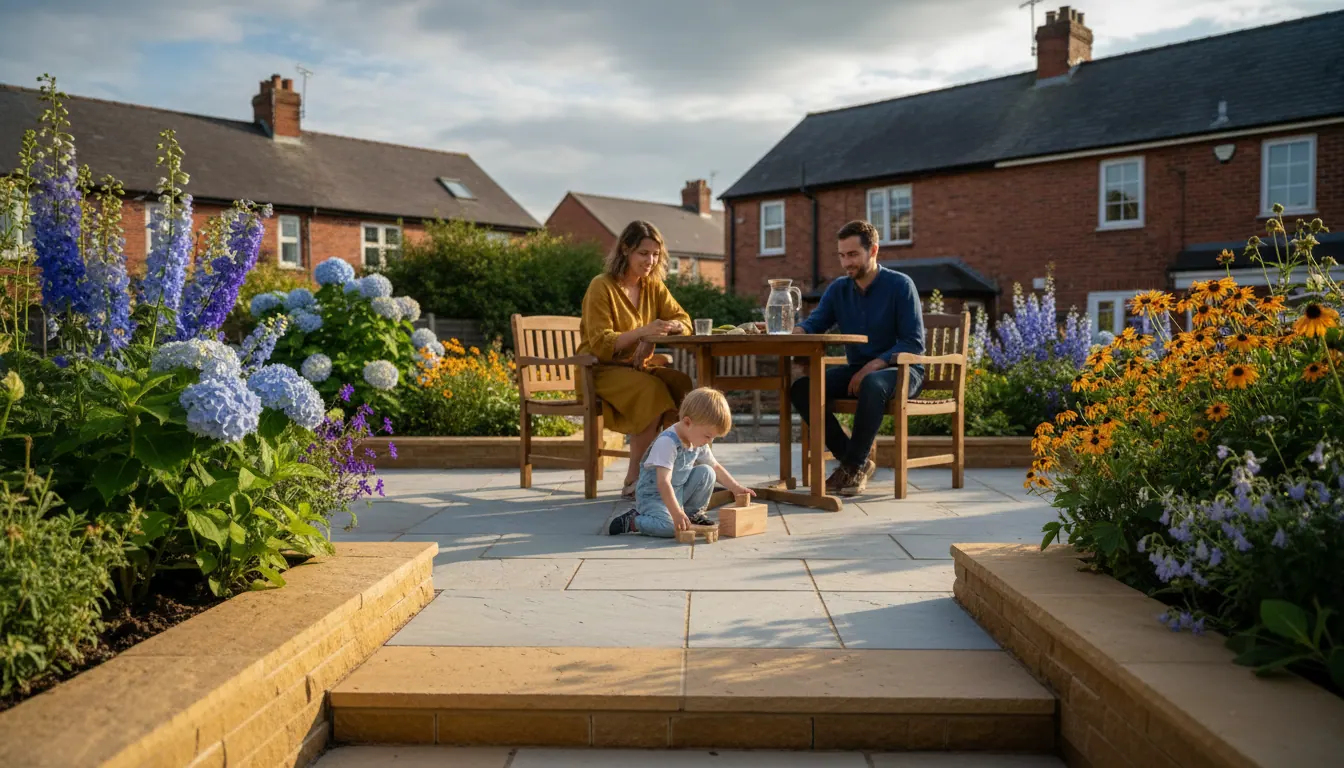
Indian Sandstone Patio Installation in Sunderland: Preparation, Laying and Long-Term Durability
Planning Indian sandstone patio installation in Sunderland? We cover design, preparation, maintenance and what makes a lasting result. Get in touch for a quote.

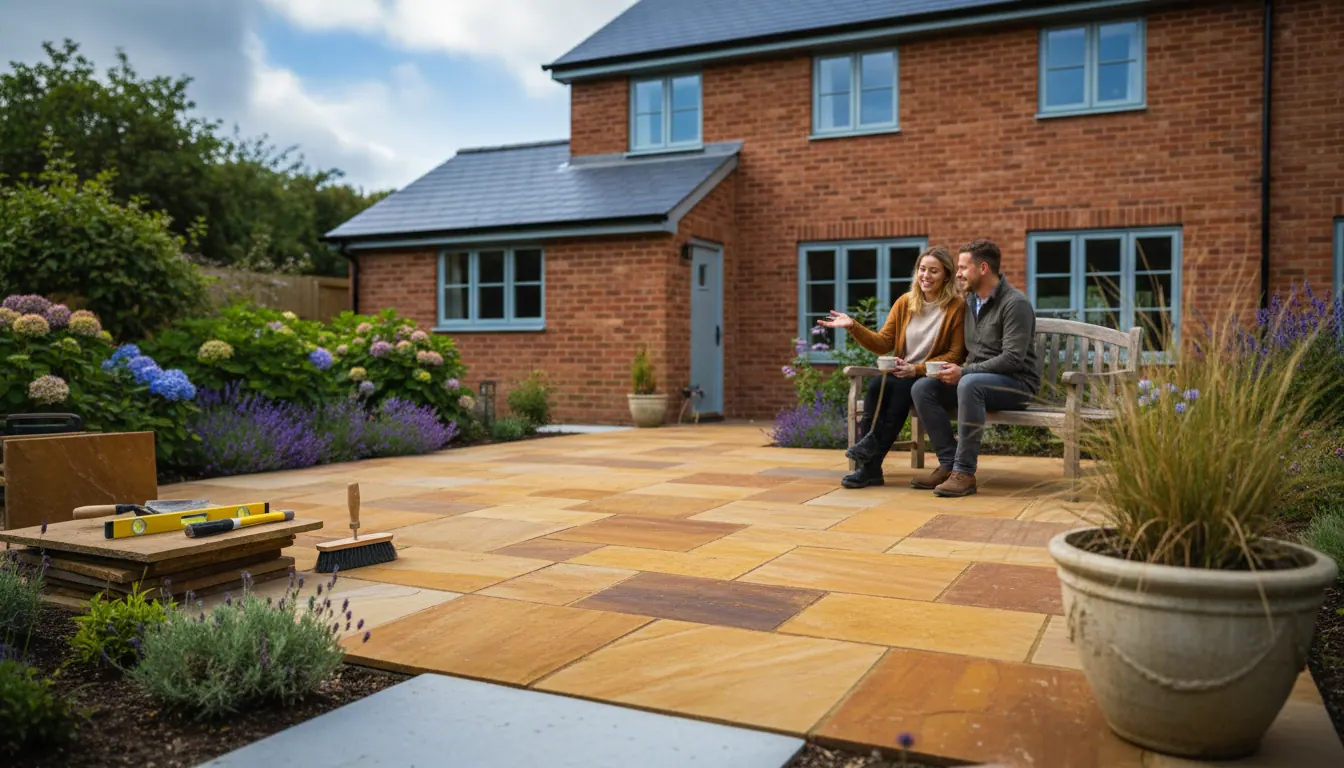
A new patio can completely change how you use your garden
A well-laid Indian sandstone patio does more than look good on a sunny afternoon. It gives you a proper outdoor space you can actually use, somewhere to sit, somewhere to entertain, somewhere that connects the back of your house to the garden in a way that feels finished and thought-through. For a lot of Sunderland homeowners, it is the single biggest improvement they make to their outdoor space.
We lay Indian sandstone patios across Sunderland and its districts, from Roker and Seaburn on the coast to Ryhope, Silksworth and Doxford Park further south, and across to Hylton Castle, Castletown and Southwick in the west. Wherever you are in the city, the same principles apply: good preparation, careful laying and the right stone for your garden.
This article walks you through what Indian sandstone patio installation in Sunderland actually involves, what to watch out for, and how to keep your patio looking its best once it is down.
Why Indian sandstone is such a popular choice in Sunderland gardens
Indian sandstone has been the go-to natural paving material for UK gardens for good reason. It is hard-wearing, naturally textured so it does not become slippery underfoot, and it comes in a range of colours that suit both older terraced houses and newer builds equally well.
Sunderland gardens vary enormously. You might have a compact yard in Hendon or Pallion, a wider plot in Ashbrooke or Barnes, or a generous rear garden in Tunstall or Doxford Park. Indian sandstone works across all of these because it cuts well, lays in different patterns and can be shaped to fit awkward boundaries.
The natural variation in the stone is also part of the appeal. No two slabs are identical, which means your patio has a character that manufactured concrete flags simply cannot replicate.
If you are weighing up colours and laying patterns, our article on Indian sandstone patio colours and laying patterns for Sunderland gardens goes into much more detail on that side of things.
What the installation process actually involves
A lot of people ask us what happens between us arriving and the patio being ready to use. Here is a straightforward run-through.
Site preparation comes first. The existing surface needs to be cleared and the ground prepared properly. This is the part that makes the biggest difference to how long your patio lasts. A properly prepared base, with the right falls so water runs away from the house, is what prevents slabs from rocking, sinking or lifting after the first winter.
Setting out and pattern planning. Before a single slab goes down, we work out the layout. This matters more than people realise. Getting the pattern to sit well within your garden's shape, avoiding awkward cuts at the edges, and making sure the finished surface lines up with doors, steps or borders takes careful planning upfront.
Laying the slabs. Indian sandstone is a natural material and each slab has its own variation in thickness. A good installer accounts for this during laying, not by forcing slabs flat but by adjusting the bed underneath each one. Rushing this stage is where problems start.
Jointing and finishing. Once the slabs are laid and set, the joints are filled. This keeps the surface stable, stops weeds taking hold and gives the finished patio a clean, tidy look.
Clearance. We take everything with us when we go. No rubble left behind, no mess for you to deal with.
That last point matters to us. David Rowley, who had work carried out by us, put it simply:
Punctual, professional and a perfect job. I was very satisfied with the work carried out. Highly recommended. No mess afterwards all cleared away. Thank you
That is the standard we aim for on every job, whether it is a small courtyard in Millfield or a large patio in Grangetown.
What are the downsides of Indian sandstone?
It is only fair to be honest about this. Indian sandstone is a natural material, and that comes with a few things worth knowing before you commit.
- It can stain. Oils, leaves, algae and general garden debris can leave marks if left to sit. Regular sweeping and occasional cleaning keep this in check, but it does need a bit of attention.
- Colour variation. The same variation that makes it beautiful also means the slabs you see in a sample may look slightly different once laid across a full patio. This is normal and settles over time.
- It needs proper preparation. Poorly prepared ground is the main cause of problems with any paving, but Indian sandstone is less forgiving than some alternatives if the base is not right. This is why choosing someone who takes the groundwork seriously matters so much.
- It can be slippery when wet if the wrong finish is chosen. A riven or textured surface handles wet weather much better than a polished one. For a Sunderland garden, where rain is a fact of life, we always recommend a surface finish that gives good grip.
None of these are reasons to avoid Indian sandstone. They are just things to go in with your eyes open about.
Should you jet wash Indian sandstone?
This is one of the most common questions we hear. The short answer: carefully, and not too often.
A pressure washer can clean Indian sandstone effectively, but using it at too high a pressure or too frequently can damage the surface and erode the jointing material between slabs. If you do use a jet wash, keep the pressure moderate and use a wide fan setting rather than a concentrated jet.
For regular maintenance, a stiff brush and warm soapy water is often all you need. For algae or green growth, a diluted patio cleaner applied gently and then rinsed off does the job without the risk of surface damage.
We have a more detailed guide to seasonal maintenance in our article on caring for and cleaning Indian sandstone patios in Sunderland, which is worth reading once your patio is down.
Getting the edges right
The edges of a patio are often what separates a patio that looks genuinely finished from one that looks like it just stops. A defined border or edging detail frames the whole space and gives it structure.
In Sunderland gardens, we often see patios that sit alongside lawn, borders, or fencing. Each of those junctions needs thinking about. A neat edge keeps the gravel or soil out of the joints, stops the slabs from creeping over time, and gives the garden a clean, considered look.
If you want to read more about edging options, our article on Indian sandstone patio edging and borders in Sunderland covers the different approaches in detail.
Frequently asked questions
How do I find a reliable Indian sandstone patio installer near me in Sunderland?
Ask to see examples of completed work, check for reviews from local customers, and make sure the installer talks through preparation properly before quoting. Anyone who skips over the groundwork in conversation is likely to skip over it on site too. We cover Sunderland and all its districts, so if you are in Fulwell, Tunstall, Ryhope or anywhere else in the city, we are genuinely local to you.
Does Indian sandstone patio installation in Sunderland need planning permission?
For most standard patios at ground level, planning permission is not usually required, but the rules depend on the size, position and how the surface drains. We would always recommend checking with Sunderland City Council or the Planning Portal for your specific situation rather than assuming.
What are the downsides of Indian sandstone compared to other paving?
The main ones are staining if left unattended, colour variation between slabs, and the fact that it needs a well-prepared base to perform properly. It also needs a textured finish for outdoor use in a wet climate. None of these are deal-breakers, but they are worth knowing before you choose. We cover this in more detail in the section above.
Should you jet wash Indian sandstone to clean it?
Yes, but with care. Keep the pressure moderate, use a wide fan setting and do not do it too frequently. For regular upkeep, a brush and soapy water is gentler and perfectly effective. Harsh or repeated jet washing can damage the surface and the joints over time.
Ready to get your patio sorted?
If you are thinking about Indian sandstone patio installation in Sunderland, whether you are in Seaburn, Silksworth, Castletown or anywhere else across the city, we would be glad to come and have a look. We quote each job individually once we understand what you need, so there are no guesses and no surprises.
Call us on 07903 360940 and let us know what you have in mind. We are straightforward to deal with and happy to answer questions before you commit to anything.