Indian Sandstone Patio Colours and Laying Patterns: Choosing the Right Look for Your Sunderland Garden
Thinking about an Indian sandstone patio in Sunderland? We explain the main colours, what suits local gardens, and how to choose with confidence.

Indian Sandstone Patio Colours in Sunderland: What Actually Works in a North East Garden
Picking the colour of your Indian sandstone is one of the most important decisions you'll make for your patio. Get it right and the whole garden feels considered and calm. Get it wrong and you're looking at something that jars every time you step outside.
We lay Indian sandstone patios across Sunderland and its districts, from Barnes and Ashbrooke to Ryhope, Silksworth and Doxford Park, and the question we hear most often is simply: "Which colour should I go for?" There's no single answer, but there are some really useful things to know before you decide.
The Main Indian Sandstone Colours and What They Look Like
Indian sandstone isn't one colour. It's quarried in different regions across India, and each region produces its own natural palette. Here's a plain-English guide to the most common options.
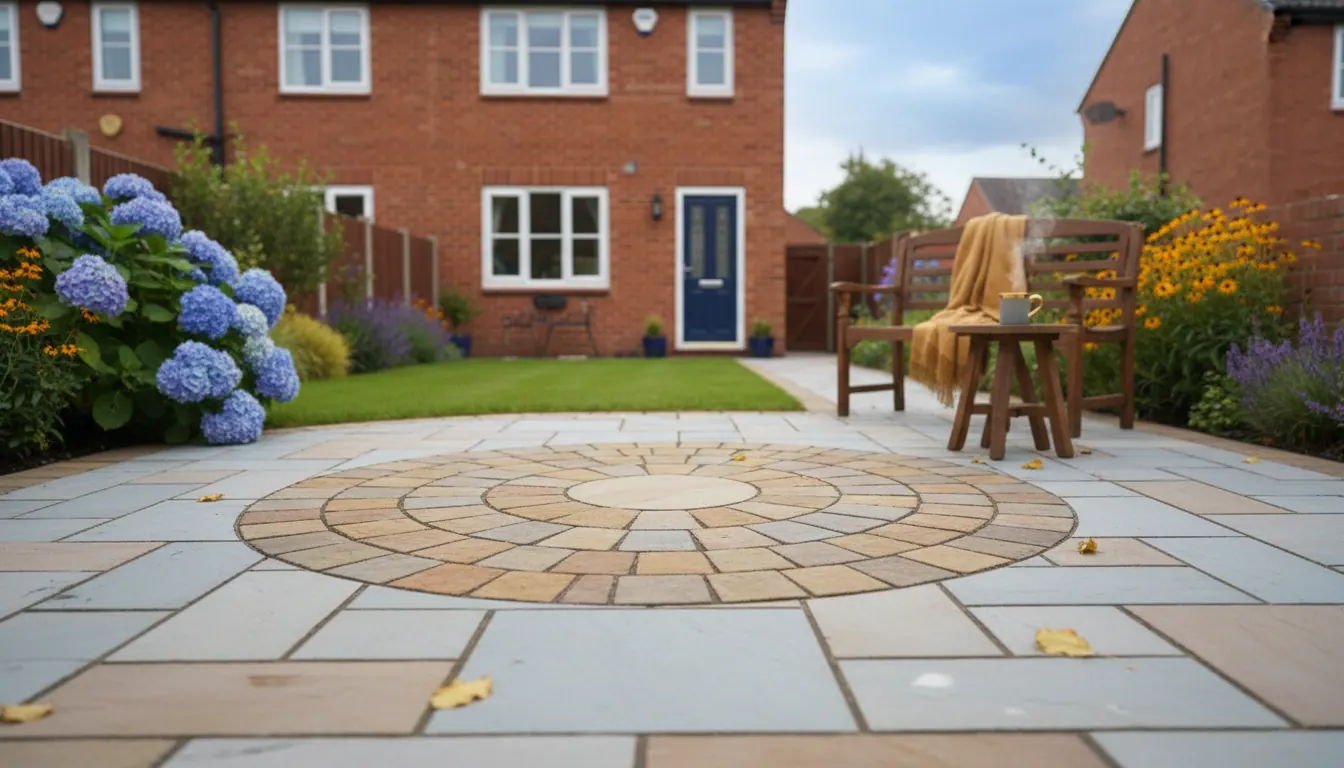
Buff and golden tones This is the most popular choice in the UK, and with good reason. Buff sandstone has warm honey and cream tones that soften in sunlight and look inviting even on a grey Sunderland afternoon. It suits both traditional brick houses and more modern builds, and it tends to age gracefully rather than looking tired.
Autumn brown and rustic blends Richer, earthier tones with streaks of rust, brown and amber. These suit cottage-style gardens and work well alongside planting, raised beds and timber features. The variation across slabs gives the patio real character.
Silver-grey and grey blend Grey Indian sandstone has become increasingly popular, particularly for more contemporary garden layouts. It pairs well with dark fencing, rendered walls and minimalist planting. If you want a clean, modern feel in a Hendon, Grangetown or Seaburn garden, a grey blend is worth a serious look. Some greys have a slight blue or lilac undertone in certain lights, so always see a sample outside before committing.
Mint and green-grey tones Less common but striking when used well. Mint sandstone has cooler, greener hues that can complement certain planting schemes beautifully. It tends to suit more naturalistic or relaxed garden styles.
Kandla grey A specific type of grey sandstone that's very consistent in colour, with less variation between slabs. It gives a neat, uniform finish that works well in tidier, more formal layouts.
Does Sunderland's Light and Weather Affect How Colours Look?
It genuinely does, and it's something worth thinking about. The North East doesn't get the same consistent bright sunshine as southern England. Our light is often softer, cooler and more diffuse, and that affects how stone reads in your garden.
Warmer buff and golden tones can look especially welcoming here because they bring some of that warmth into a space even on an overcast day. Grey tones, while beautiful, can occasionally feel cold in flat light, so they tend to work better in gardens that get a reasonable amount of sun or where there are warm contrasts nearby, such as timber cladding, brick or lush planting.
Our advice is always to get a sample slab and look at it in your own garden, at different times of day, before you order. What looks great in a showroom under artificial light can look very different laid outside in Roker or Fulwell.
Mixing Colours: Feature Kits and Blended Patios
You don't have to stick to one colour. Many homeowners in Sunderland opt for a blended palette, combining two tones to add depth and interest. A popular approach is to use a mid-tone buff as the main field with a darker border or contrasting inset slabs to frame the space.
Some paving comes in what suppliers call "feature kits" or patio kits, which include a mix of slab sizes and occasionally two complementary colours already chosen to work together. These can take some of the guesswork out of the design stage and give a really cohesive result.
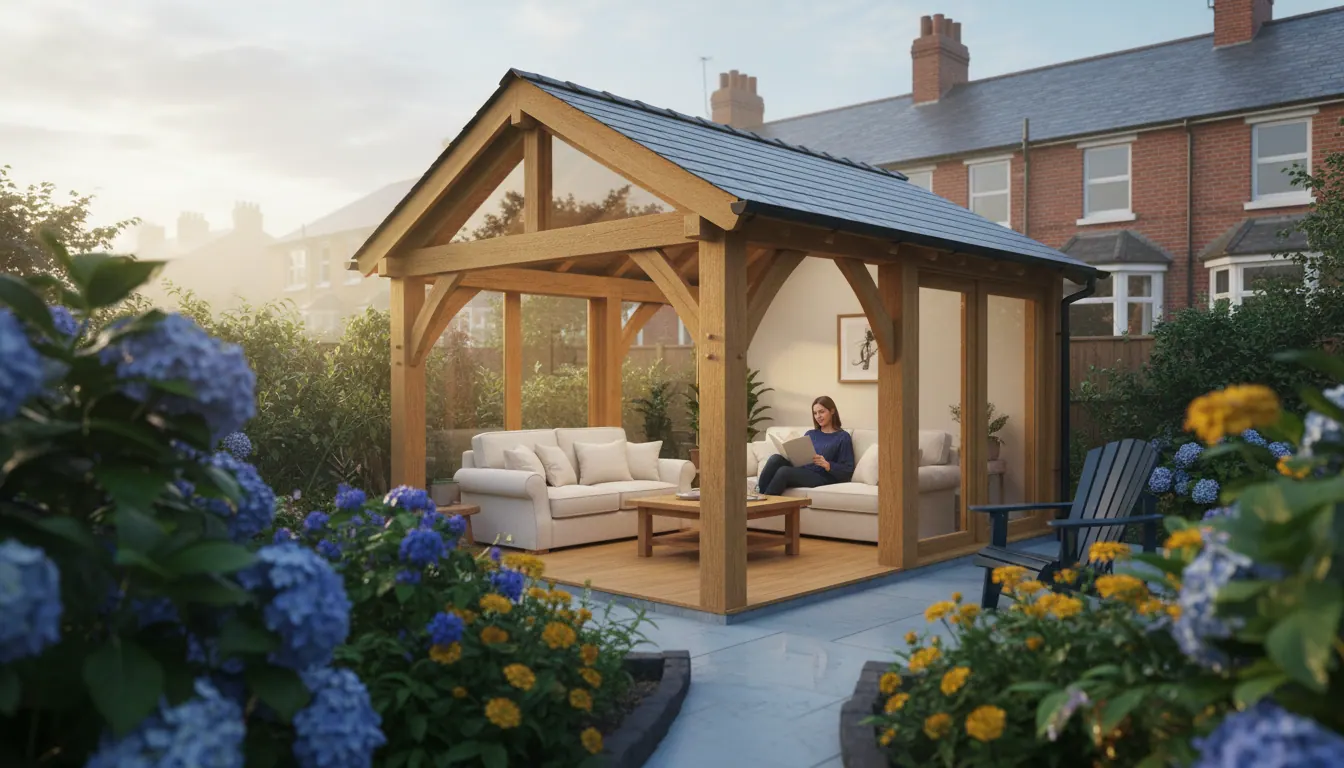
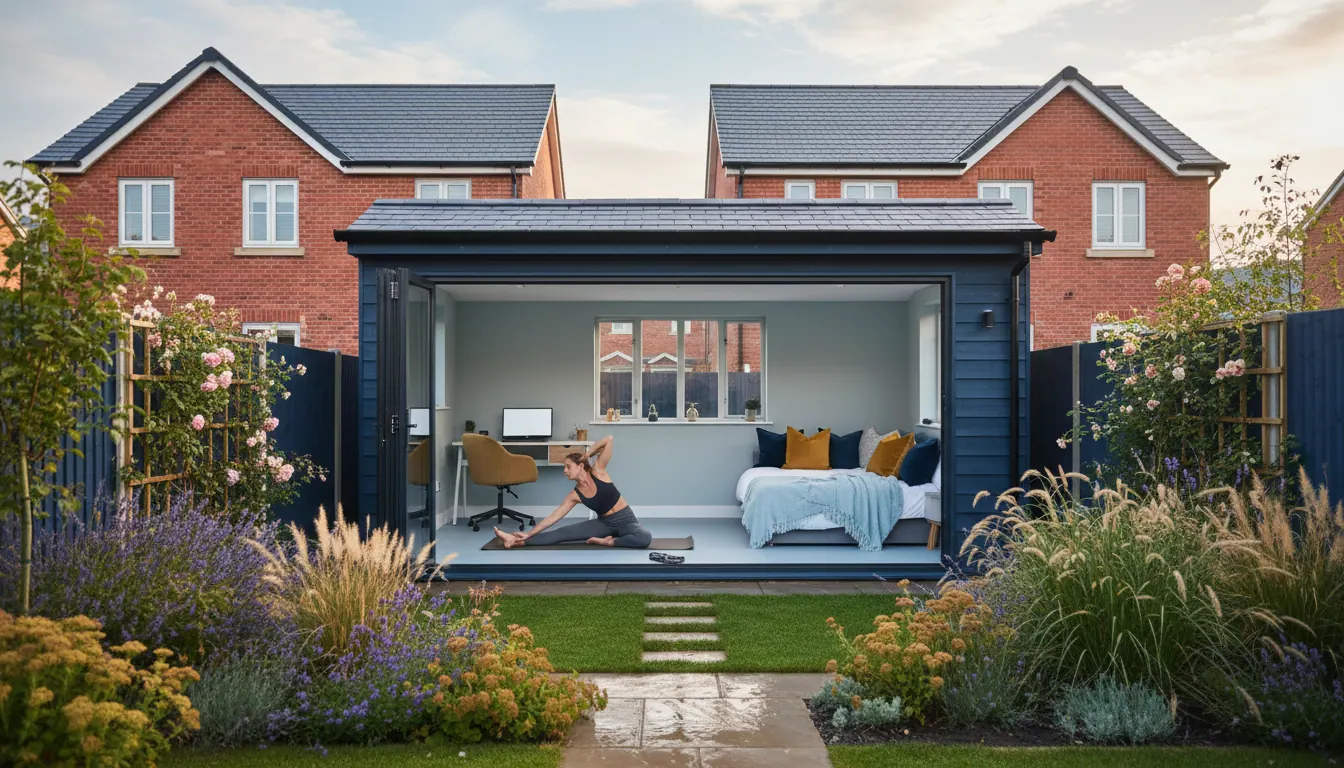
If you're combining your patio with a garden room, it's worth thinking about how the stone colour relates to the cladding. A warm buff patio alongside a natural timber-clad garden room tends to feel harmonious and grounded. A grey patio can look sharp and contemporary next to painted or dark-stained timber. We're always happy to talk through those combinations at the quote stage.
What Are the Downsides of Indian Sandstone?
It's a fair question and worth answering honestly. Indian sandstone is a natural material, which is part of its appeal, but it does have some characteristics to be aware of.
- Colour variation. Every slab is slightly different. For most people that's a feature, not a flaw, but if you want very uniform, consistent colour, sandstone might not be the right choice. Porcelain paving would suit you better.
- It can stain. Sandstone is porous, so spills, leaf tannins and algae can mark it if not dealt with. Regular sweeping and an occasional gentle wash keep it looking its best.
- It needs a properly prepared base. Sandstone laid on a poorly prepared base will shift, settle unevenly and crack. We always prepare the base properly with correct falls so water runs off cleanly. That's non-negotiable for a patio that lasts.
- Some cheaper imported stone is inconsistent in quality. Thickness can vary across a batch, which makes laying harder and affects the finished look. We're careful about the stone we use.
None of these are reasons to avoid Indian sandstone. They're just things to go in with your eyes open about.
Should You Jet Wash Indian Sandstone?
This comes up a lot. The short answer is: carefully, and not too often.
A pressure washer can be useful for shifting stubborn algae or grime, but used at too high a pressure it can erode the surface of the stone and open up the joints, which lets more water and debris in over time. If you do use a pressure washer, keep the pressure low and use a wide fan nozzle rather than a concentrated jet.
For regular maintenance, a stiff brush and warm soapy water is usually enough. Rinse well afterwards. Moss and algae tend to build up more in shaded or damp corners, so keeping those areas clear of debris and allowing air to circulate helps.
What One of Our Customers Said
David Rowley had his patio laid by us and left this feedback:
Punctual, professional and a perfect job. I was very satisfied with the work carried out. Highly recommended. No mess afterwards all cleared away. Thank you
That "no mess afterwards" part matters. We take care of how we leave your garden, not just how the finished patio looks. Clearance and tidying up is part of the job.
Pairing Your Patio with a Garden Room
A lot of our customers in Sunderland are thinking about both a new patio and a garden room at the same time, and that makes a lot of sense. The two work together to create a proper outdoor living and working space.
If you're planning a garden office in Silksworth or a hobby studio in Tunstall, for example, a well-laid sandstone patio outside the door gives you a clean, smart transition between the room and the garden. It also makes the whole space feel more considered and finished.
You can read more about what goes into our garden rooms in our article on timber-framed garden rooms in Sunderland, and if you're thinking about a room that works for more than one purpose, our piece on garden rooms for multiple uses is worth a read.
Frequently Asked Questions
What is the most popular colour of Indian sandstone in UK gardens? Buff and golden tones are consistently the most popular choice. They have a warm, natural look that suits a wide range of garden styles and tends to complement the typical brick and render you find across Sunderland's housing stock. Grey blends have grown in popularity in recent years, particularly for more modern or contemporary layouts.
What are the downsides of Indian sandstone paving? The main ones are that it's porous (so it can stain and needs some maintenance), it has natural colour variation between slabs, and the quality can vary depending on where it comes from. Laid on a properly prepared base by someone who knows what they're doing, it's a durable and attractive choice. Laid badly, it won't last.
Should you jet wash Indian sandstone? You can, but use low pressure and a wide nozzle rather than a concentrated jet. High pressure can damage the surface and open up the joints over time. For routine cleaning, a stiff brush and warm soapy water is usually all you need.
Do I need planning permission for an Indian sandstone patio in Sunderland? For most standard patios at ground level in a back garden, planning permission isn't required, but the rules around hard surfaces, drainage and permitted development can depend on your specific property and location. Size, position and how the water runs off all play a part. We'd always suggest checking with Sunderland City Council or the Planning Portal if you have any doubt, particularly for front gardens or larger schemes.
Get in Touch About Your Sunderland Patio
If you're thinking about Indian sandstone for your garden in Sunderland, whether that's in Castletown, Pallion, Hylton Castle or anywhere else across the city, we'd love to have a chat about what would work for your space. We quote each job individually once we understand what you're after, so there's no guesswork on either side.
Call us on 07903 360940 and we'll talk through your ideas, colours, layout and anything else you want to know. No pressure, just a straightforward conversation about your garden.
“Amazing company, listened to everything I wanted and made it happen, they are friendly and very good with communication”