Caring for and Cleaning Indian Sandstone Patios in Sunderland: Seasonal Maintenance Tips
Practical Indian sandstone patio maintenance tips for Sunderland homeowners. Keep your paving clean, bright and long-lasting with this straightforward local guide.

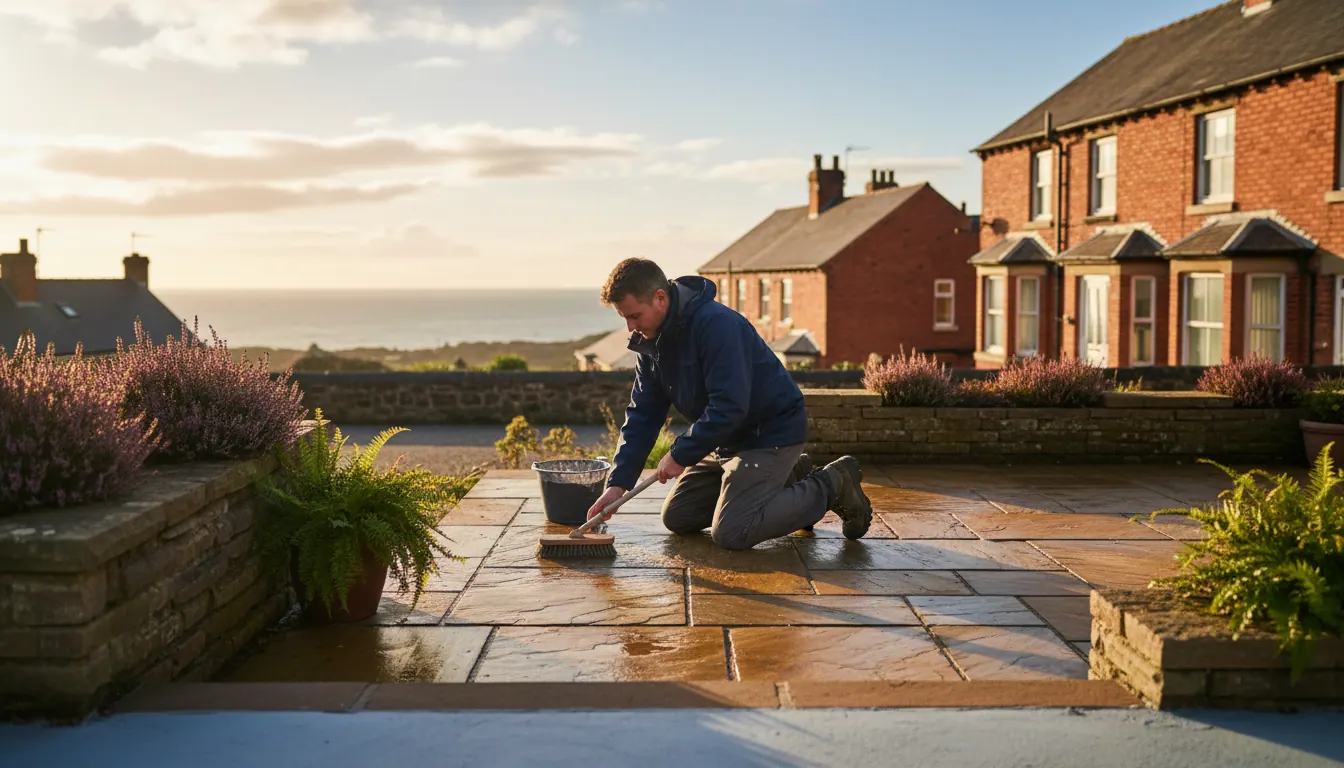
A Sunderland patio takes a bit of looking after, and that is no bad thing
Indian sandstone is one of the most popular paving choices in gardens across Sunderland, from the coastal plots in Roker and Seaburn to the more sheltered back gardens in Silksworth, Doxford Park and Ryhope. It looks genuinely beautiful when it is laid well and cared for properly. The natural colour variation, the texture underfoot, the way it handles the North East light on a bright afternoon, there is nothing quite like it.
But sandstone is a natural material, and natural materials need a little attention. Left completely to their own devices, the slabs can go green, the joints can loosen, and the surface can lose that warm, fresh look that made you choose it in the first place. The good news is that maintenance is straightforward once you know what to do and what to avoid.
This guide covers everything Sunderland homeowners need to know about looking after an Indian sandstone patio, season by season.
Why Indian sandstone needs regular attention in the North East
The North East climate is not harsh by global standards, but it is wet, and it stays wet for a good part of the year. Moisture is the main enemy of any patio surface. With sandstone specifically, the issues to watch for are:
- Algae and moss growth. Damp, shaded areas in gardens across Pallion, Southwick or Hendon can see green growth appear quite quickly, especially through autumn and winter.
- Staining. Leaves, berries, rust from metal furniture, and general garden debris all leave marks if they sit on the surface for too long.
- Joint erosion. The pointing or jointing material between slabs can break down over time, especially after a hard winter.
- Surface dulling. Grime and mineral deposits build up gradually, and the stone loses its original warmth.
None of these problems are serious if you catch them early. They all become harder to deal with the longer they are left.
Routine cleaning: what actually works
The single most effective thing you can do is brush and rinse your patio regularly. A stiff brush and a good rinse with a garden hose will shift loose debris and surface dirt before it gets a chance to bond with the stone. Do this every few weeks during autumn when leaves are falling, and once a month through the rest of the year.
For a deeper clean, a diluted patio cleaner designed for natural stone works well. The key word there is "natural stone." Some general-purpose patio cleaners are too acidic for sandstone and will etch the surface or strip the colour. Always check that whatever you use is suitable for Indian sandstone specifically before you apply it.
A pressure washer can be useful, but use it with care. A wide fan nozzle and a moderate pressure setting is the way to go. High-pressure, close-range blasting will damage the surface texture of the stone and blast out the jointing material between slabs. Keep the nozzle moving, keep a sensible distance, and you will be fine.
Dealing with green growth and staining
Moss and algae are the most common complaints we hear from homeowners across Ashbrooke, Barnes and Grangetown. They make the surface look tired, and they can make it slippery underfoot, which is a real concern if you have children or older family members using the patio.
A natural stone-safe algae treatment applied in early spring and again in early autumn will keep growth under control without harming the stone. Apply it, leave it to work, then brush and rinse. For stubborn patches, a second application usually does the job.
For staining from leaves or rust, a poultice paste specifically for natural stone can draw out the mark without bleaching the surrounding area. It takes patience, but it works far better than scrubbing, which can spread the stain and scratch the surface.
Checking and repointing the joints
The gaps between your sandstone slabs are just as important as the slabs themselves. Jointing material that is crumbling or missing lets water get underneath the slabs, which leads to movement, cracking and uneven surfaces over time.
Walk the patio every spring and have a look at the joints. If you can see gaps, crumbling edges or areas where the material has washed away, those sections need repointing before the next winter. It is a straightforward job to have done, and it makes a real difference to how the patio holds up over the years.
Seasonal maintenance: a simple calendar
Keeping on top of things throughout the year is much easier than tackling a neglected patio all at once. Here is a simple approach that works well for Sunderland gardens:
Spring
- Brush off winter debris and rinse the whole surface.
- Apply an algae treatment.
- Walk the patio and check the joints for any winter damage.
- Deal with any stains before they set.
Summer
- Rinse regularly, especially after garden parties or barbecues.
- Move furniture occasionally so the stone weathers evenly.
- Keep plant pots on feet or risers to avoid moisture trapping and rust marks underneath.
Autumn
- Clear leaves as they fall rather than letting them sit.
- Apply a second algae treatment before the wet months arrive.
- Check joints again and repoint anywhere that needs attention before winter.
Winter
- Avoid salt or chemical de-icers on sandstone. They damage the surface. Use sharp sand or a natural grit instead if the patio becomes icy.
- Rinse the surface when temperatures allow to clear grime and debris.
What a well-laid patio looks like from the start
Maintenance is much easier when the patio has been laid properly in the first place. A properly prepared base and slabs laid with the right falls so water runs off the surface naturally mean you are not fighting a losing battle every season. Standing water is the root cause of most sandstone problems, and good preparation at the laying stage prevents it.
That is why we take care with every patio we lay, whether it is a full garden transformation in Tunstall or a neat courtyard space in Millfield. A patio that drains well and sits level and stable is a patio that stays looking good with minimal effort from you.
If you are thinking about a new Indian sandstone patio to complement a garden room or just to make the most of your outdoor space, have a look at our guide to Indian sandstone patio colours and laying patterns for ideas on colours and patterns that suit different garden styles across Sunderland.
What our customers say
We take real pride in leaving a job tidy and done properly. David Rowley, who left us a recommendation on Facebook, put it simply:
Punctual, professional and a perfect job. I was very satisfied with the work carried out. Highly recommended. No mess afterwards all cleared away. Thank you
That last part matters to us. A clean, well-finished job is the standard we work to on every project.
Thinking about a garden room to go alongside your patio?
A new sandstone patio and a bespoke garden room make a genuinely brilliant combination. The patio creates a natural transition from the house to the garden room, and having a proper outdoor space to step into makes the garden room feel even more connected to the rest of your home.
We build timber-framed, insulated garden rooms across Sunderland and its districts, designed for home offices, hobby studios, salons and more. If you are curious about what a garden room could add to your garden, our article on garden rooms for multiple uses covers how one well-designed space can serve several different purposes.
Frequently asked questions about Indian sandstone patio maintenance in Sunderland
Can I use a pressure washer on my Indian sandstone patio? Yes, but carefully. Use a wide fan nozzle, keep the pressure at a moderate setting and keep the nozzle moving. Close-range, high-pressure blasting will damage the stone surface and erode the jointing material between slabs. A gentle, sweeping motion at a sensible distance is all you need for a thorough clean.
How do I stop my sandstone patio going green and slippery? Regular brushing and rinsing is the first step. Beyond that, applying a natural stone-safe algae treatment in early spring and again in early autumn keeps growth under control. Shaded areas in gardens across Fulwell, Hylton Castle and Castletown are particularly prone to green growth because they stay damp longer, so those spots may need more frequent attention.
How often should I repoint an Indian sandstone patio? Check the joints every spring. In most Sunderland gardens, some repointing is needed every few years, depending on how much foot traffic the patio gets and how the winter has been. Catching it early and repointing small sections is much simpler than waiting until the joints have failed across a large area.
Do I need planning permission for a new patio in Sunderland? Most domestic patio projects do not require planning permission, but the specifics depend on your property and what you are planning. Size, position and use all play a part, so it is always worth checking with Sunderland City Council or the Planning Portal before you start, rather than assuming.
Ready to talk about your patio or garden room?
Whether you are thinking about a new Indian sandstone patio in Ryhope, a garden room in Seaburn, or both together, we are happy to come and have a look at your space and talk through what would work best. No jargon, no pressure, just a straightforward conversation about your garden and what you want from it.
Call us on 07903 360940 and let us know what you have in mind.