Indian Sandstone Patio Edging and Borders in Sunderland: Framing Your Garden Space
Planning Indian sandstone patio edging in Sunderland? We explain the options, common mistakes to avoid, and how a neat edge transforms your garden.

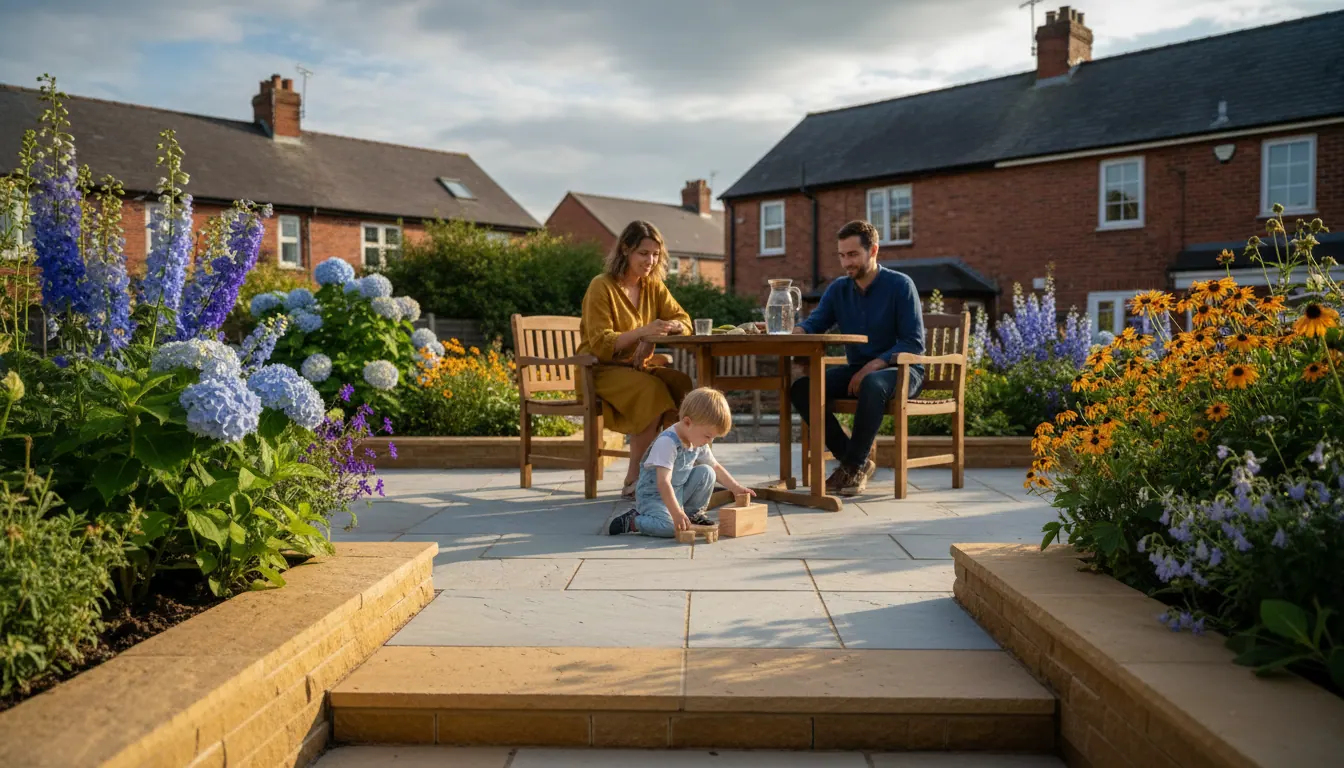
A neat edge makes the whole patio
A well-laid Indian sandstone patio can look stunning. But without a proper edge, it starts to shift, spread and look tired far sooner than it should. The edging is what holds everything together, keeps the slabs from creeping outward and gives the whole space a finished, intentional look.
We lay Indian sandstone patios across Sunderland, from Roker and Seaburn down to Ryhope and Silksworth, and one of the most common things we talk through with homeowners is how they want the edges treated. It is not an afterthought. It is part of the design from day one.
This article walks through the edging options available, what to think about before you choose, and the mistakes that cause problems down the line.
Why edging matters more than most people realise
Indian sandstone is a natural material. It is cut to size, but gardens are not perfectly level rectangles. Where a patio meets a lawn, a border, a path or a wall, there is always a transition to manage.
Without a defined edge:
- Slabs can shift outward over time, especially where the ground is soft or where feet constantly walk close to the perimeter
- Lawn grass and weeds push in underneath the slabs, lifting them and breaking the pointing
- The patio looks unfinished, even when the centre is laid beautifully
- Water can pool at the edges rather than running away as it should
A properly prepared base and a well-chosen edge detail solve all of these problems at once.
The main edging options for Indian sandstone patios
Soldier course in matching sandstone
This is the most popular choice we see in Sunderland gardens. A soldier course uses the same Indian sandstone slabs, cut into narrower strips and laid upright or on their edge along the perimeter. It ties the whole patio together visually because the colour and texture match throughout.
It works particularly well with riven sandstone, where the natural surface variation makes the edging look like a deliberate design feature rather than something tacked on.
Contrasting stone or block edging
Some homeowners want a defined border that stands apart from the main patio surface. Using a darker or lighter stone, or a neat row of block paving, creates a frame effect. This can look really sharp, especially on a larger patio where the eye needs a clear boundary.
Block paving edging is also very practical. It is robust, sits flush or slightly proud depending on what you want, and handles foot traffic well. We sometimes use this approach where a patio connects to a block-paved path, so the two surfaces tie together naturally.
Bullnose edging slabs
Bullnose slabs have one rounded edge, designed to sit at the perimeter of the patio with the curved edge facing outward. They are particularly useful where the patio drops away to a lawn or lower level, because the rounded edge is safer underfoot and looks intentional rather than just cut-off.
They are available in Indian sandstone to match most common colours, including Raj Green, Fossil Mint and Camel Dust.
Flush lawn edging
Where a patio meets a lawn directly, some homeowners prefer a clean flush edge rather than a raised kerb. This means the slabs are laid so their surface sits just slightly above the lawn level, with the edge pointed neatly. It is a minimalist look that suits contemporary gardens.
The key here is getting the levels right from the start, so water runs off the patio surface rather than pooling at the edge where it meets the grass.
Thinking about drainage when you plan your edging
Whatever edging style you choose, water needs to go somewhere. A patio should always be laid with a gentle fall away from the house, so rain runs off rather than sitting on the surface or draining toward the building.
Your edging detail affects how that water exits the patio. If you have a raised edge all the way around, you need to think about where the water escapes. A gap in the edging, a channel or a lower point at one corner all work, but they need to be planned in advance, not fixed afterwards.
We discuss drainage at the quote stage so there are no surprises once the work is done.
Common mistakes when laying and edging Indian sandstone
These are the things we see go wrong most often, and they are all avoidable.
Skipping the pointing on the edging. The joints between edging stones need to be pointed just as carefully as the main patio surface. Unpointed joints let weeds in and let water work behind the edging, which loosens it over time.
Using the wrong mortar mix for the conditions. Sunderland gardens are exposed. Coastal areas like Roker and Seaburn get more wind and salt air than most. The pointing needs to be appropriate for the conditions, not just whatever is cheapest. We discuss materials at the quote stage.
Laying edging before the base is properly prepared. The base has to be right first. If the ground beneath the edging is not properly consolidated with the correct falls, the edging will move regardless of how well it is laid on top.
Not accounting for ground movement. Gardens in areas like Hylton Castle, Castletown and Pallion can have ground that moves more than expected, particularly in wet winters. Edging that is set too rigidly without any allowance for slight movement can crack or pop out. A good installer knows how to handle this.
Mixing styles without a plan. It can be tempting to use up leftover slabs or offcuts for the edging. The result often looks patchy. A clear plan from the start, even a simple sketch, prevents this.
What one of our customers said
David Rowley left us this feedback after we completed his job:
Punctual, professional and a perfect job. I was very satisfied with the work carried out. Highly recommended. No mess afterwards all cleared away. Thank you
That last line matters to us. Paving work involves cutting stone, mixing materials and working in someone's garden. We take care to leave the space clean and tidy, not just the finished patio.
How edging works alongside the wider patio design
If you are planning a new Indian sandstone patio in Sunderland, the edging is part of the overall design conversation, not a separate decision made at the end. The colour and texture of the edging, how it relates to any paths or borders nearby, and how it handles the transition to lawn, planting or fencing all shape how the finished space looks and feels.
You might also want to think about whether a block-paved path leads from the patio to a gate or garden room. If so, the edging styles of both surfaces need to work together. We cover this in more detail in our article on block paving paths and borders around your Sunderland garden room.
And if you are choosing your sandstone colour and laying pattern at the same time, our guide on Indian sandstone patio colours and laying patterns walks through the main options and what suits different garden sizes and styles.
Frequently asked questions
How do you repoint an Indian sandstone patio?
Repointing means removing the old, crumbling mortar from the joints and replacing it with fresh pointing material. The old material is carefully raked out without damaging the slabs, the joints are cleaned, and fresh mortar is worked in and finished neatly. It is worth doing properly rather than just pressing new mortar over the top of the old, because the new material will not bond well to loose or crumbling joints underneath. If your patio is in Sunderland and the pointing has failed across a wide area, it is often worth having the whole surface assessed before deciding whether to repoint in sections or address the whole patio at once.
What are the most common mistakes when laying sandstone patio slabs?
The most common ones we see are: an inadequately prepared base that leads to movement and cracking; poor or skipped pointing that lets weeds in; no allowance for drainage falls so water sits on the surface; and rushing the work before materials have had time to set properly. Edging is often where these mistakes show up first, because the perimeter takes more stress than the centre of the patio.
Does Indian sandstone patio edging need planning permission in Sunderland?
For most standard patios in a rear garden, planning permission is not required, but size, height, position and use all affect the rules. The only reliable answer is to check with Sunderland City Council directly or use the Planning Portal, especially if your garden is in a conservation area or your property is listed.
Can I mix Indian sandstone edging with block paving on the same project?
Yes, and it often works very well. A sandstone patio with a block paving border or path leading away from it gives a clear visual structure to the garden. The key is choosing colours that complement each other and planning the levels so both surfaces drain correctly. We are happy to talk through what would work in your specific garden.
Get in touch with us
If you are planning a new patio in Sunderland, whether in Barnes, Ashbrooke, Grangetown, Tunstall, Doxford Park or anywhere else across the city, we would be glad to come and have a look. We will talk through the edging options, the sandstone colours and everything else at the quote stage, with no pressure and no jargon.
Call us on 07903 360940 to arrange a visit.