Block Paving Paths and Borders Around Your Sunderland Garden Room: Planning Access and Drainage
Thinking about block paving in Sunderland? We lay neat, durable block-paved paths and patios across Sunderland and its districts. Here's what to consider before you start.

Block paving in Sunderland gardens: what you actually need to know
A well-laid block-paved path or patio can completely change how a garden looks and feels. It gives you clean edges, a surface that lasts, and a finish that looks intentional rather than thrown together. We lay block paving for Sunderland homeowners right across the city, from Roker and Seaburn on the coast to Ryhope, Silksworth and Doxford Park further south, and from Fulwell and Southwick in the north down through Pallion, Millfield and Hendon.
This article is for anyone thinking about block paving in their garden and wondering where to start. We'll walk through the main choices, what makes a good job, and how block paving compares to other surfaces like Indian sandstone paving slabs.
What is block paving and where does it work well?
Block paving uses individual, small-format paving units laid in a pattern across a properly prepared base. In gardens, it works particularly well for:
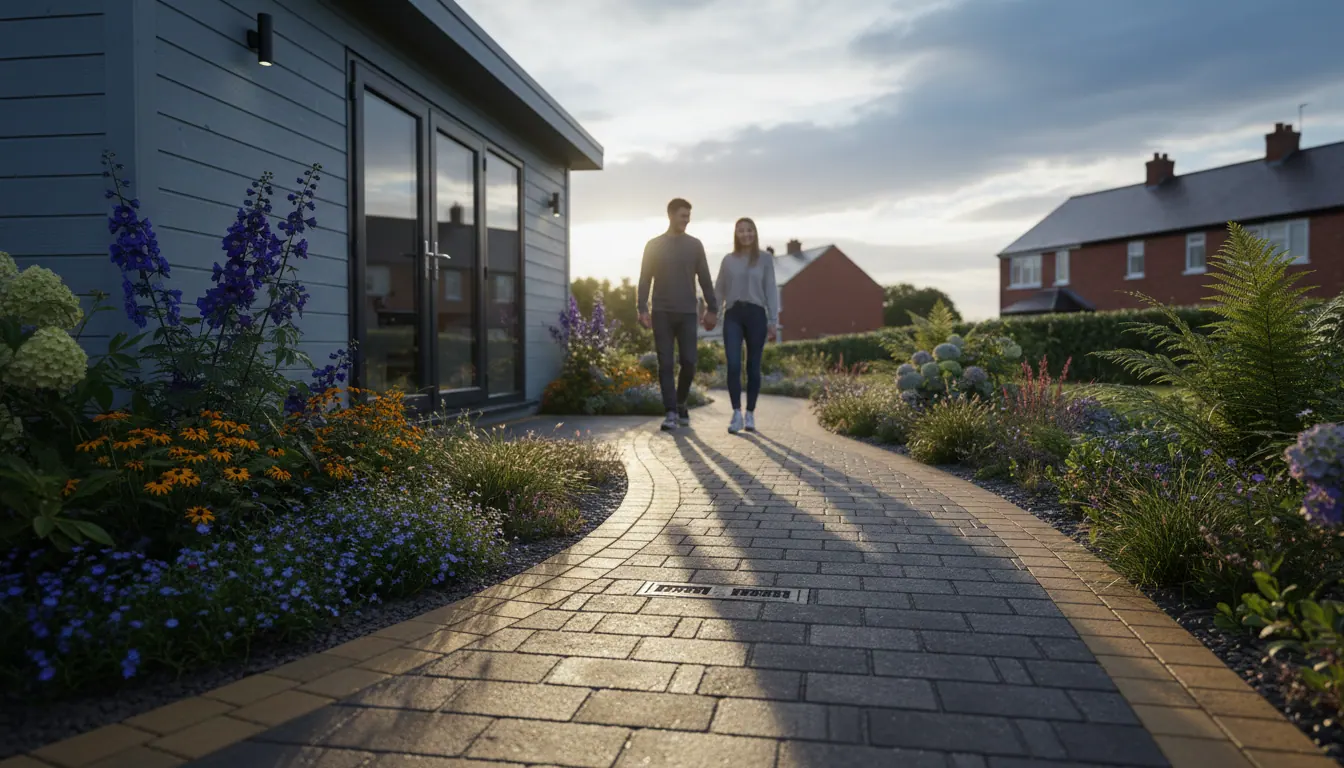
- Paths leading from the gate to the front door, or from the house to a garden room or outbuilding
- Edging and borders that frame a lawn or a planted bed
- Small patio areas where you want a more structured, geometric look
- Side passages where a clean, hard-wearing surface makes sense
It creates a neat, defined look that suits a wide range of garden styles. A terrace in Ashbrooke with a period feel can carry a traditional herringbone pattern beautifully. A newer-build property in Tunstall or Hylton Castle often suits a simple running-bond layout. The pattern and the block colour do a lot of the work.
Concrete block paving: the practical choice
Concrete block paving is the most widely used option for garden paths and patios in Sunderland. It's consistent in size, it comes in a good range of colours and finishes, and it holds up well to the North East's weather. The blocks interlock, which means the surface distributes load and resists movement over time when it's been laid properly.
The colour range is wider than many people expect. You can go with warm buff and honey tones that sit alongside natural stone, or cooler grey and charcoal shades that give a more contemporary finish. Mixing two block colours to create a border or a feature panel within a path is a popular choice and one we're happy to discuss when we come out to look at the job.
One thing worth knowing: concrete block paving looks best when it's laid with precision. Consistent joint widths, straight lines and neat cuts at the edges are what separate a job that ages well from one that starts looking tired within a couple of years. That attention to detail is something we take seriously on every job we do.
What about timber block paving?
People occasionally search for "timber block paving" and it's worth explaining what that usually refers to. Timber block paving, sometimes called wood block paving or end-grain timber paving, uses sections of timber cut across the grain and set into a surface. It gives a very distinctive, warm look and is sometimes used in garden paths and courtyard areas.
It's a less common choice than concrete block paving, and it does require careful preparation and ongoing maintenance to keep it looking good in a wet climate like ours. If you're interested in exploring timber-based surfacing options, it's worth having a conversation with us about what's realistic for your specific garden and how much maintenance you're comfortable with.
Getting the base right
The most important part of any block paving job isn't the blocks themselves. It's what goes underneath them. A properly prepared base, with adequate depth and the right falls so that water runs away from the house and doesn't pool on the surface, is what makes the difference between a patio that stays level and one that sinks, shifts or puddles.
We don't cut corners on preparation. The surface you see at the end is only as good as the groundwork beneath it, and groundwork done badly is expensive to fix later. We keep the specifics of base preparation, depths and materials as part of our quoting conversation, because every garden in Sunderland is different. The ground conditions in Castletown are not the same as those in Grangetown or Barnes, and we treat each job accordingly.
Block paving alongside Indian sandstone: mixing surfaces in a Sunderland garden
A growing number of homeowners we work with in Sunderland are choosing to mix surfaces rather than stick to one material throughout the garden. Block paving and Indian sandstone paving slabs can work very well together when the colours are chosen carefully.
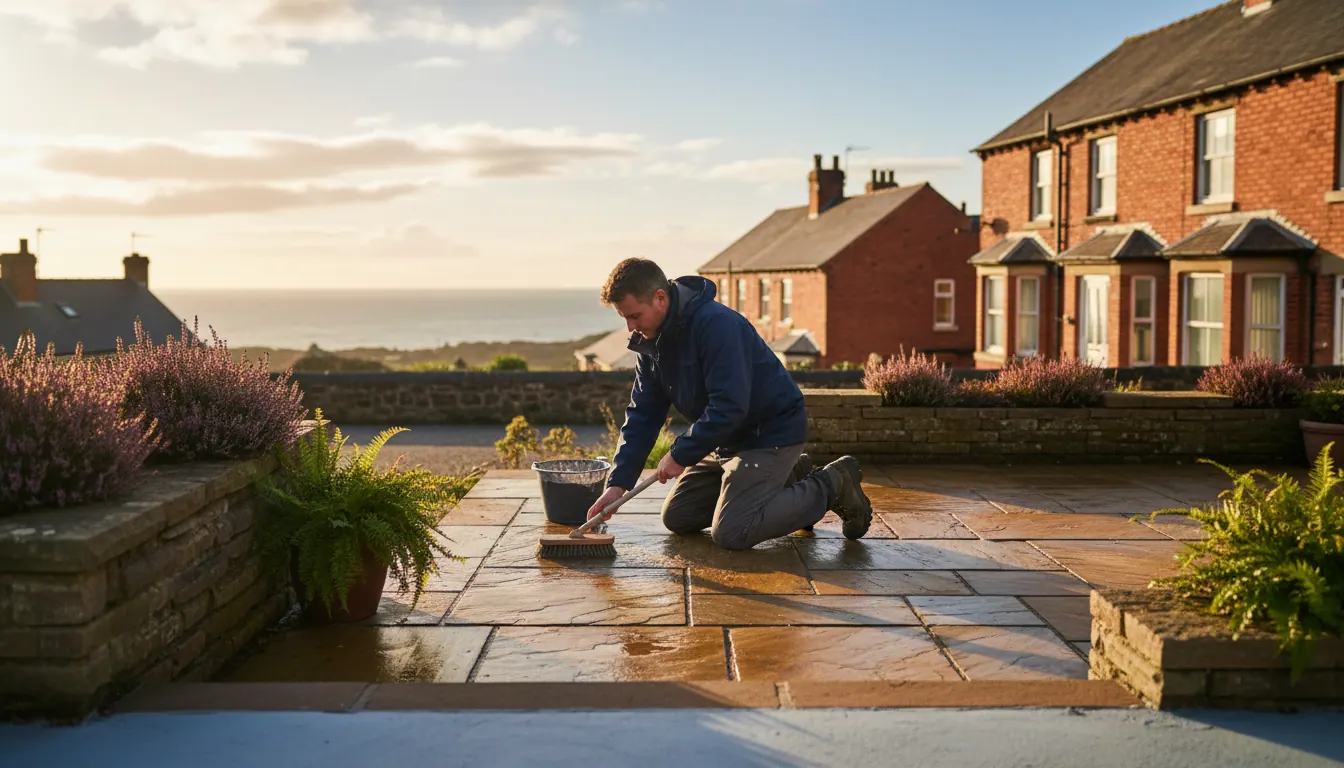
A common approach is to use Indian sandstone as the main patio surface, then use block paving for the path leading to it or for a border that frames the slabs. The contrast in texture and scale adds visual interest without the garden looking busy.
If you're thinking about Indian sandstone as part of your project, our article on Indian sandstone patio colours and laying patterns is a useful place to start. It covers the main colour families and how different laying patterns change the feel of a space.
Patterns and layouts worth considering
The pattern you choose affects the whole character of the finished surface. Here are the main options:
Herringbone is the classic for block paving. The interlocking 45-degree or 90-degree layout gives a traditional, structured look and is one of the strongest patterns in terms of how it distributes load. It suits period properties in areas like Ashbrooke and the older terraces in Millfield or Hendon.
Running bond (also called stretcher bond) uses blocks laid in offset rows, similar to brickwork. It's a clean, contemporary look that suits newer homes and minimalist garden designs.
Basket weave uses pairs of blocks laid alternately horizontal and vertical. It creates a more decorative effect and works well in smaller areas like a courtyard or a seating nook.
Soldier course edging is a single row of blocks laid end-on around the perimeter. It gives the whole surface a finished, intentional edge and is something we often recommend to give the job that tidy, professional look.
What a good block paving job looks like when it's done
The proof of a well-done job is in the details. Joints that are consistent and properly filled. Cuts that are clean and tight against walls, steps and borders. A surface that sits flush with any adjacent hard landscaping. And crucially, no mess left behind.
David, one of our customers, put it simply:
Punctual, professional and a perfect job. I was very satisfied with the work carried out. Highly recommended. No mess afterwards all cleared away. Thank you
That last line matters to us. A finished garden should look like the work is complete, not like a job site that's been abandoned. We tidy up properly at the end of every job, every time.
Block paving and your garden room: thinking about the whole space
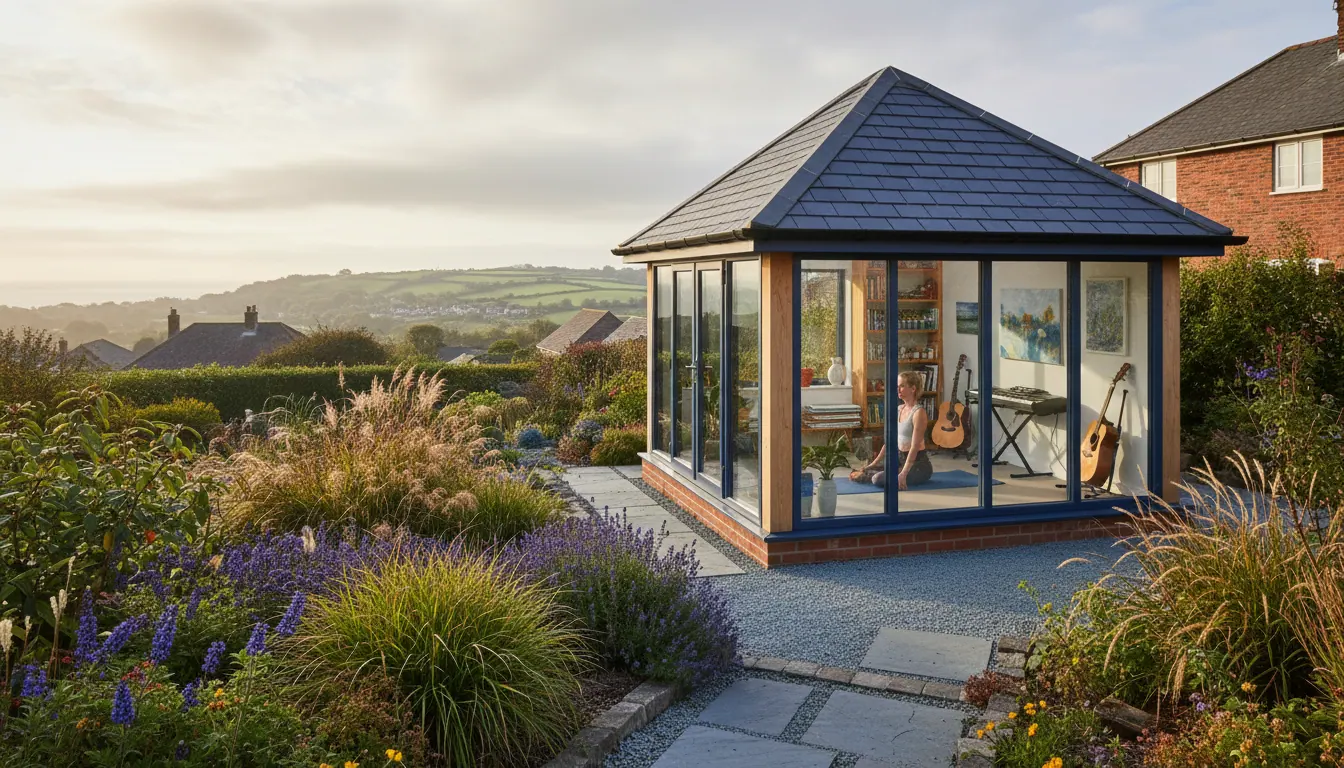
If you're planning a garden room, a garden office or an outbuilding of any kind, it's worth thinking about the path or patio that leads to it at the same time. A timber-framed, insulated garden room deserves a proper approach. A well-laid block-paved path ties the room into the garden and makes the whole thing feel considered.
We build bespoke garden rooms across Sunderland, from Seaburn and Roker to Silksworth and Ryhope, and we can talk through paving options as part of the same project. Our article on garden rooms for multiple uses gives a good sense of what's possible if you're still working out what you'd use the space for.
Frequently asked questions about block paving in Sunderland
Does block paving in a garden need planning permission? In most cases, garden paths and small patio areas don't require planning permission, but the size, position and use of the surface all play a part. We'd always say: check with Sunderland City Council or use the Planning Portal before you start, so you know exactly where you stand.
How do I keep block paving looking good over time? Regular brushing to clear debris and the occasional wash-down keeps most block-paved surfaces in good condition. Weeds can work their way into joints over time, so it's worth dealing with them promptly. Keeping the surface clear of standing water also helps it last. For Indian sandstone, we've written a detailed seasonal guide on caring for and cleaning Indian sandstone patios in Sunderland that covers a lot of the same principles.
Can I mix block paving with other surfaces like paving slabs? Yes, and it often looks great. The key is choosing colours and textures that complement each other rather than compete. We're happy to talk through options when we visit.
Do you lay block paving throughout Sunderland? We do. We work across Sunderland and its districts, including Roker, Seaburn, Fulwell, Southwick, Pallion, Millfield, Hendon, Ashbrooke, Barnes, Grangetown, Ryhope, Silksworth, Doxford Park, Tunstall, Hylton Castle and Castletown. If you're in or around Sunderland, get in touch and we'll come and take a look.
Ready to talk about block paving for your garden?
Every garden is different, and the best way to get a clear picture of what's possible in yours is to have a proper conversation. We quote each job individually once we understand what you're working with, what you want to achieve, and what the ground conditions are like.
Call us on 07903 360940 and we'll arrange a visit. No pressure, just a straightforward chat about your garden and what we can do with it.